“With tropical” search results (6000)

Intense and inviting Guatemala coffee estate region Flavor Taste Characteristics Fine coffee beans Introduction
Guatemala is located in the tropics. The northern and eastern coastal plain areas belong to tropical rain forest climate, and the southern mountainous areas belong to subtropical climate. There are two dry and wet seasons in a year. The wet season is from May to October, and the dry season is from November to April of the following year. Guatemala has a tropical climate on the narrow, fertile plains of the Pacific Ocean. The central plateau is also the cultural center of Guatemala, where year-round temperatures range from 1300 to 1800 meters
2016-08-10 rich human Guatemala coffee manor appellation flavor taste characteristics fine
Brazilian coffee beans
Brazilian coffee beans refer to all coffee beans grown in Brazil. Except for Sanduo, Brazilian beans are mostly "cheap and good" coffee. Can be used for mass production of comprehensive coffee beans, most of which are re-roasted. The main raw material of instant coffee is also Brazilian coffee beans.
2014-08-18 Coffee knowledge Brazilian coffee beans coffee encyclopedia
The economic value of cultivated coffee is the world's largest tropical food
Coffee is the second largest raw material product after petroleum in international trade and one of the largest tropical food raw materials in the world. Coffee is most commonly used as a beverage, and among the world's three major beverages, coffee consumption is the largest. At present, there are hundreds of kinds of foods made of coffee, which are favored by consumers because of their convenience and nutrition. Coffee contains starch and fat.
2015-10-07 cultivation coffee economy value world bulk tropical food international trade
Introduction of varieties with flavor and taste characteristics of Brazilian coffee manor with diversity
In terms of natural conditions, Brazil is in the tropics, with a tropical rain forest climate in the north, hot and humid all the year round, suitable for tropical crops, coffee trees are sunny crops, and sufficient sunlight is the condition for their growth. Historically, Brazil has been a Portuguese colony for a long time. In order to meet the needs of Western Europe, Brazilian coffee has been growing single crops for a long time and developing tropical plantations.
2016-09-07 With diverse sexual Brazilian coffee manor producing area flavor taste characteristics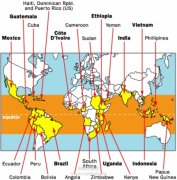
Coffee knowledge, boutique coffee, common sense coffee with Coffee Zone
There are more than 60 coffee producing countries in the world, most of which are located in the tropics and subtropics between the Tropic of Cancer (latitude 2326). This coffee growing area is called coffee belt (Coffee Belt) or coffee area (Coffee Zone). The annual average temperature of the coffee belt is above 20 ℃, because the coffee tree is a tropical plant and cannot grow normally if the temperature is below 20 ℃. Coffee species
2015-01-06 Coffee knowledge boutique common sense Zone world coffee
Floral aromas, tropical fruits, strong sweetness from the ancient native species of Ethiopia
The fragrance of flowers, tropical fruits, strong sweetness; these are the feelings that Rose Summer has always given us. Properly baked, they make you feel like sipping the fragrance of a bouquet of flowers. Maybe you don't know the story of Rose Summer, which was originally taken as a coffee sample to a coffee experimental garden in Costa Rica and distributed to several small farms.
2016-08-03 Floral tropical fruit strong sweet from Ethiopia ancient native flowers
Raw beans of Jamaican coffee
The unique flavor of Blue Mountain Coffee is related to its geographical location and climatic conditions. Generally speaking, south of the Tropic of Cancer and north of the Tropic of Cancer, this area is suitable for growing coffee, called the coffee belt. Jamaica is just south of the Tropic of Cancer. The blue mountain is steep, the air is fresh, there is no pollution, it rains all the year round, and there is a great temperature difference between day and night, which has a unique and fertile new volcanic soil.
2014-09-01 Coffee knowledge Jamaican coffee blue mountain coffee beans coffee raw beans
Coffee trees grow around the equator.
Coffee trees grow in tropical or subtropical agricultural gardens centered around the equator and called coffee belts. Most of the coffee production is between the Tropic of Cancer, 25 degrees north of the tropical or subtropical equator and 30 degrees south of the equator. An area with an annual average temperature of 16-25 degrees Celsius, no Frosts Descent and rainfall of 1600-2000 mm. At present, coffee is mainly produced by seven countries.
2015-05-29 Coffee tree grow equator center coffee for the middle
Introduction to the flavor and taste of the fragrant Guatemalan coffee manor
Guatemala is located in the tropics, the northern and eastern coastal plains have a tropical rain forest climate, the southern mountains have a subtropical climate, the year is divided into two dry and wet seasons, with the wet season from May to October and the dry season from November to April of the following year. The narrow and fertile flatlands on the Pacific side of Guatemala have a tropical climate. The central plateau is also the cultural center of Guatemala, where the year-round temperature ranges from 1300 to 1800 meters.
2016-08-11 Mellow Guatemala Coffee Manor producing area Flavor Taste characteristics introduction Hertz
Dominica Coffee Flavor description, characteristics of Grinding, introduction to Fine Coffee
The earliest coffee in Dominica was introduced from Martinique (the overseas province of France), dating back to the early 18th century. Dominica is an island country with a tropical climate. The temperature changes little throughout the year. Except for the lower temperature in the Central Cordillera Mountains, which can reach less than 0 ℃ in winter, the annual average temperature in other areas is between 25 and 30 ℃, which is affected by the mountain topography.
2016-10-11 Dominica coffee flavor description grinding characteristics treatment boutique introduction more
Tropical African Coffee Bean Elgon Mountain area, Uganda, which produces Robart Coffee beans
The cultivation of coffee in Uganda is all small-scale family operation. The livelihood of 25% of the population is closely related to coffee production. About 500000 farms grow coffee, but mainly Robster. Robster accounts for 90% of coffee production, and the remaining 1 is Arabica coffee. Arabica and Live Buster are harvested from October to February of the following year. Ugandan coffee
2016-06-22 Tropical Regional Africa Coffee Bean Uganda Robbins producing area El Elg
Coffee trees grow around the equator.
Coffee trees grow in tropical or subtropical agricultural gardens centered around the equator and called coffee belts. Most of the coffee production is between the Tropic of Cancer, 25 degrees north of the tropical or subtropical equator and 30 degrees south of the equator. An area with an annual average temperature of 16-25 degrees Celsius, no Frosts Descent and rainfall of 1600-2000 mm. At present, coffee is mainly produced by seven countries.
2015-07-01 Coffee tree grow equator center coffee for the middle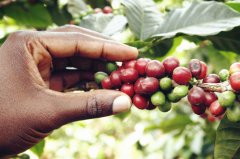
Sillvia coffee is treated with Solkiln with a strong tropical fruit flavor Ninety Plu.
Sillvia Solkiln N2 Sillvia Solkin N2 Sillvia Solkin N2 name Origin: Sillvia Coffee is the result of the first Solkiln treatment of coffee from plot 11 in Rosa Manor Lane in 2012. All the coffee in this plot was processed at the same time, but in the end only 25 kilograms of coffee with special flavor was successfully obtained. In 2013, we have to
2016-07-11 Sillvia Coffee adopt Solkiln handle Rich strong
Introduction to the Fine Coffee Bean Manor in Guatemala Coffee growing Environment
Guatemala is located in the tropics, the northern and eastern coastal plains have a tropical rain forest climate, the southern mountains have a subtropical climate, the year is divided into two dry and wet seasons, with the wet season from May to October and the dry season from November to April of the following year. The narrow and fertile flatlands on the Pacific side of Guatemala have a tropical climate. The central plateau is also the cultural center of Guatemala, where the year-round temperature ranges from 1300 to 1800 meters.
2016-08-17 Taste slippery Guatemala coffee planting environment boutique coffee beans manor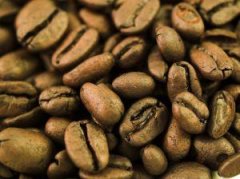
Where is the basic knowledge of boutique coffee?
Coffee trees grow in tropical or subtropical agricultural gardens centered around the equator and called coffee belts. Most of the coffee production is between the Tropic of Cancer, 25 degrees north of the tropical or subtropical equator and 30 degrees south of the equator. An area with an annual average temperature of 16-25 degrees Celsius, no Frosts Descent and rainfall of 1600-2000 mm. At present, coffee is mainly produced by seven countries.
2015-03-04 Boutique coffee basic knowledge where tree grow equator center
Introduction of Guatemala Antigua Coffee with rich taste
Guatemala is located in the tropics, the northern and eastern coastal plains have a tropical rain forest climate, the southern mountains have a subtropical climate, the year is divided into two dry and wet seasons, with the wet season from May to October and the dry season from November to April of the following year. The narrow and fertile flatlands on the Pacific side of Guatemala have a tropical climate. The central plateau is also the cultural center of Guatemala, where the year-round temperature ranges from 1300 to 1800 meters.
2016-08-17 Taste rich Guatemala Antioch coffee flavor characteristics boutique introduction danger
Guatemala Antigua Coffee Flavor description introduction to the treatment of varieties in producing areas
Guatemala is located in the tropics, the northern and eastern coastal plains have a tropical rain forest climate, the southern mountains have a subtropical climate, the year is divided into two dry and wet seasons, with the wet season from May to October and the dry season from November to April of the following year. The narrow and fertile flatlands on the Pacific side of Guatemala have a tropical climate. The central plateau is also the cultural center of Guatemala, where the year-round temperature ranges from 1300 to 1800 meters.
2016-09-28 Guatemala Antioch Coffee Flavor description Variety producing area treatment method introduction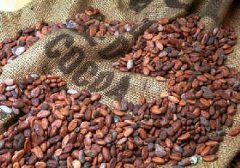
Brazilian coffee bean boutique coffee common sense
Brazilian coffee beans include all coffee beans grown in Brazil. Except for Sanduo, Brazilian beans are mostly cheap and good coffee. Can be used for mass production of comprehensive coffee beans, most of which are re-roasted. The main raw material of instant coffee is also Brazilian coffee beans. When the coffee bean germ is very fresh, it is artificially refined and naturally dried in the vulva for about 60-70 days to make the fruit
2015-04-13 Brazil coffee beans boutique coffee common sense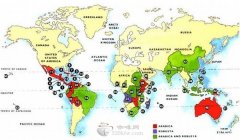
Coffee belt coffee trees grow at the center of the equator
Coffee trees grow in tropical or subtropical agricultural gardens centered around the equator and called coffee belts. Most of the coffee production is between the Tropic of Cancer, 25 degrees north of the tropical or subtropical equator and 30 degrees south of the equator. An area with an annual average temperature of 16-25 degrees Celsius, no Frosts Descent and rainfall of 1600-2000 mm. At present, coffee is mainly produced by seven countries.
2014-09-13 Coffee knowledge coffee belt coffee tree growth
Description of Brazilian Coffee Flavor with smooth taste introduction to Culture of planting Environment of varieties in producing areas
In terms of natural conditions, Brazil is in the tropics, with a tropical rain forest climate in the north, hot and humid all the year round, suitable for tropical crops, coffee trees are sunny crops, and sufficient sunlight is the condition for their growth. Historically, Brazil has been a Portuguese colony for a long time. In order to meet the needs of Western Europe, Brazil has been planting single crops for a long time and developing tropical plantation economy.
2016-09-19 Taste slippery Brazil coffee flavor description producing area variety planting environment